Обзор продукта CamGuard AI
Двенадцать слайдов о том, что распознаёт система, как отсеиваются ложные срабатывания, по каким каналам приходит оповещение и как всё работает на объекте. Читайте здесь или скачайте PDF.
Презентация на английском языке.
We turn existing security cameras
into an early-warning system
CamGuard AI analyzes the feed from the ONVIF/RTSP cameras a business already runs; it detects flame, smoke, people, and vehicles, and sends an alert over five channels within seconds.

The cameras are there, but nobody is watching
Hundreds of thousands of businesses already have camera infrastructure in place. Yet almost every one of those systems is a recording device, not an alerting device. The footage is looked at only after something has happened.
Fire is noticed too late
A smoke detector waits for smoke to rise to the sensor. In a high-bay warehouse, a greenhouse, or an open yard it is far too late, or never. The first 5 minutes decide a warehouse fire.
Theft is seen afterwards
A motion sensor cannot tell a swaying branch, a passing animal, and a shadow apart. A system that keeps crying wolf gets switched off — and nobody is warned when it matters.
Nobody watches screens 24/7
On a site with dozens of cameras it is simply not possible for a guard to follow every screen without a break. On the night shift the odds drop further.

Four detection types, one platform
Flame detection
Flame is picked up the moment its glow enters the camera's field of view. It works in night vision too: the system recognizes from the picture itself that the camera has switched to black-and-white, and applies night-specific criteria.
Smoke detection
The model is trained to recognize both flame and smoke. In smoldering fires smoke becomes visible before flame does, which makes it critical for early warning.
People / unauthorized entry
It looks for a person, not motion. Branches, animals, rain, and shadows raise no alarm. Each camera defines which zone is watched at which hours.
Vehicle detection
Can be defined as a separate rule. Parked, stationary vehicles are filtered out; at night the glare of headlights is told apart from flame.

Five channels, at the same time
- Automated phone call — the system calls your contacts automatically and states the type and location of the event.
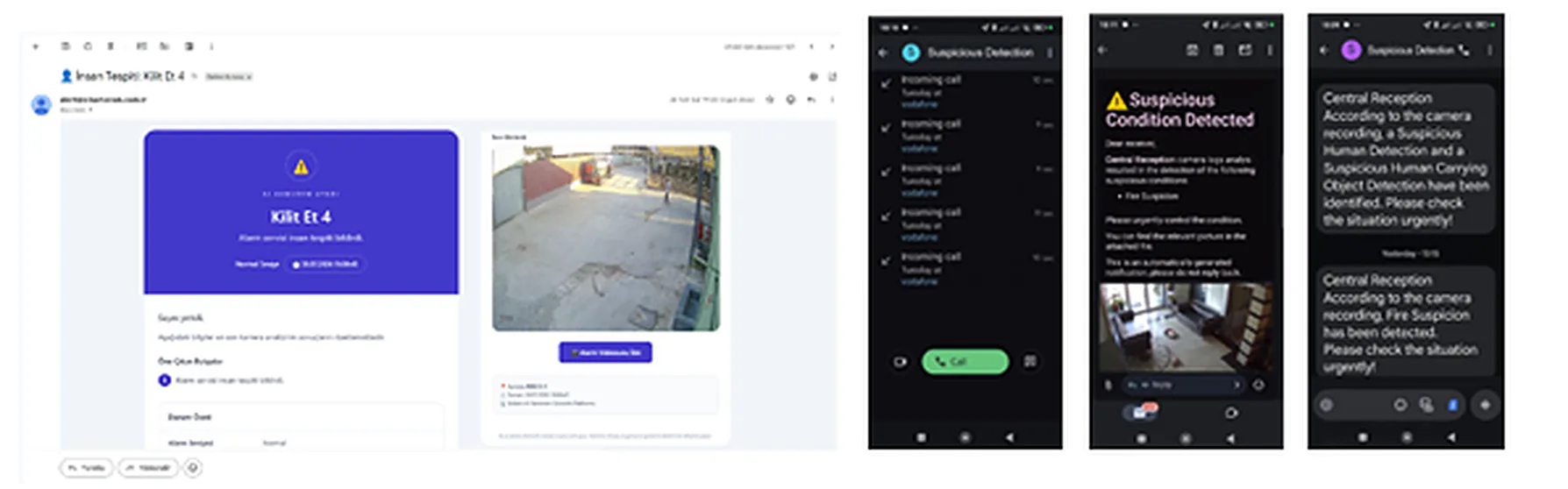
- SMS — a short alert with the camera name and the time.
- Email — a snapshot of the moment, with camera name, location, and time.
- Mobile push notification — instantly, to panel users.
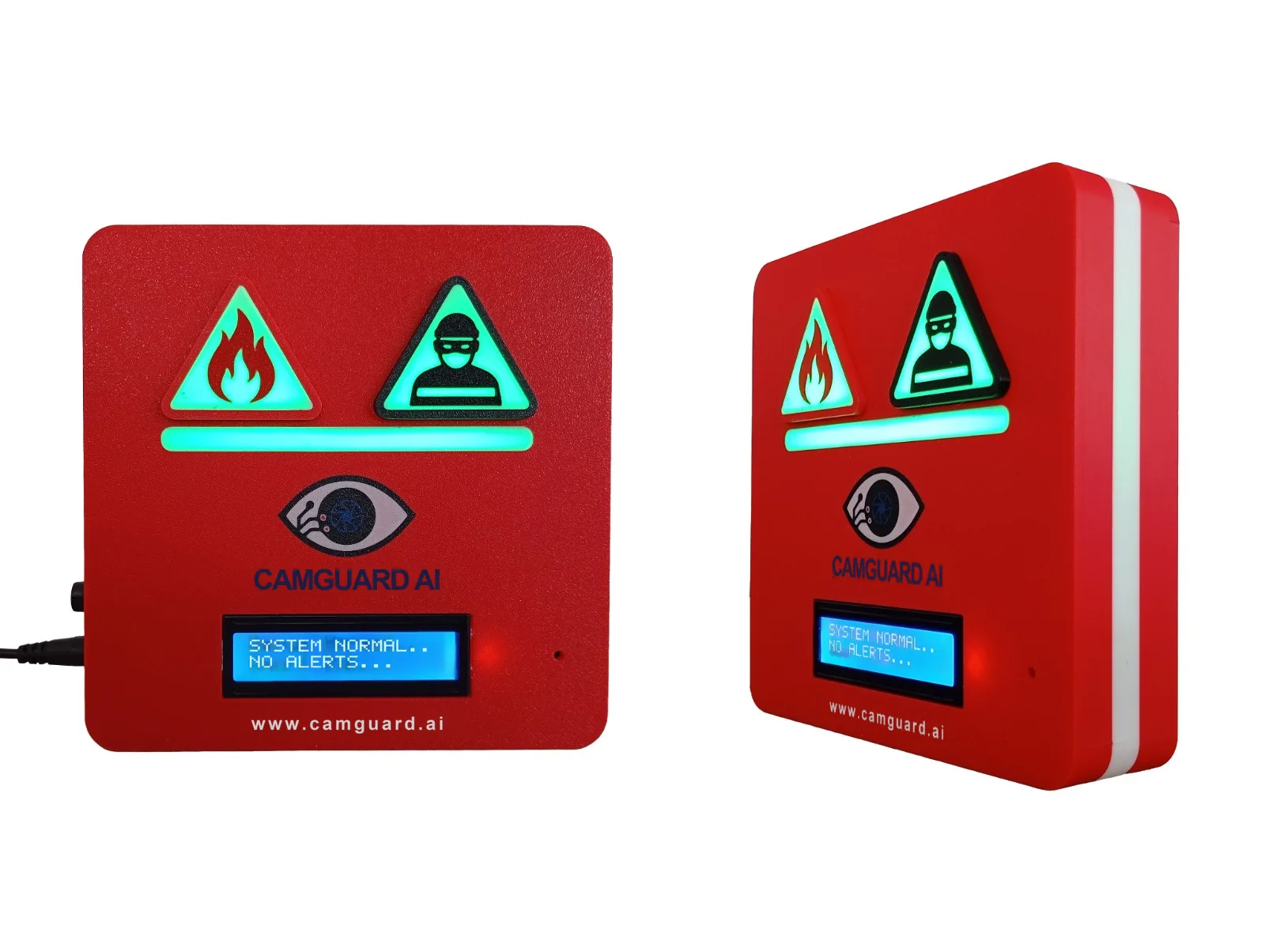
- On-site alarm device — a loud siren, a flashing red fire/intruder icon, and the type and location of the event on an LCD screen.
Analysis on site, management at the center
The live camera stream never leaves the premises. Only the evidence frame and the event record of a verified alarm reach the central panel. That is decisive for privacy and for bandwidth alike.
Field (edge) server
Inside the facility, on the same network as the cameras. 24/7 analysis on GPU. Hardware scales with camera count, from a single-board edge device to a multi-GPU server.
Central panel
Every site is monitored from one panel. Organization- and user-level permissions, event archive, video recording, reporting, and notification settings.
Data privacy compliance
Personal data is processed where it arises. Access logs, retention controls, and user-level permissions in the panel. Guidance on notice and signage duties is provided at setup.
~105 kbps / camera
Average traffic from the field server to the center. There is no continuous video upload.
Works through outages
Analysis and the local alarm device carry on; queued alerts go out when the link returns.
Your NVR stays
The recording system stays in place; CamGuard AI reads and analyzes the same stream.

Every site on one screen
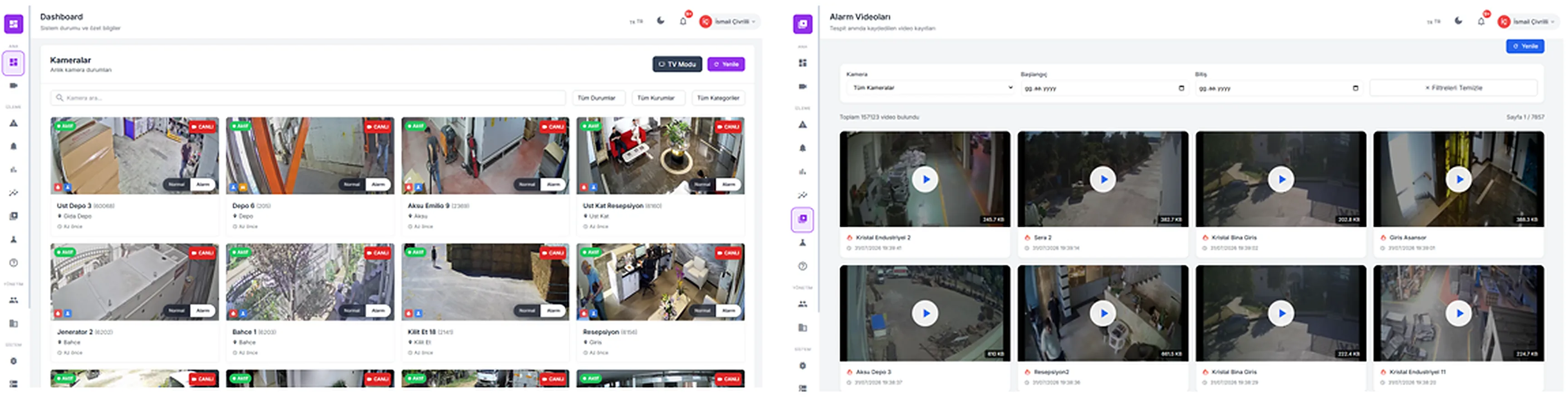
Live event tracking
Real-time notice in the panel as an alarm fires
Event and video archive
Evidence frame + event video
Zone and time rules
Drawn directly on the camera image
Multi-organization access
Permissions per organization and user
CamGuard AI in brief
Builds on the existing investment
No new cameras, no new cabling, no thermal hardware. The installed ONVIF/RTSP infrastructure is used brand-independently; the NVR stays put.
Warns before the event
Flame, smoke, people, and vehicles are detected the moment the camera sees them; an alert goes out over five channels within seconds.
Does not produce false alarms
Eight filter layers and a second-stage visual verification. Zone and time rules exclude the known sources.
Video never leaves the site
Analysis runs on the field server; only the alarm evidence goes to the center. Privacy-first design, ~105 kbps per camera.
www.camguard.ai · support@camguard.ai · +90 555 595 26 00 (phone and WhatsApp)